What is INSPIRING ERA?

Bringing the European Research Area (ERA) closer to its research community

INSPIRING ERA is a Horizon Europe project that supports researchers, research and higher education institutions, and innovation actors in understanding and applying the outcomes of the European Research Area (ERA). It helps turn policy into practice by connecting the people who create ERA policies with those who are affected by them and make use of them on the ground.

INSPIRING ERA’s mission is to make ERA outcomes visible, understandable, and usable. We focus on the practical side of policy—translating its effects and showcasing ERA tools, frameworks, and services that the research and innovation community can take up.

We develop factsheets, organise events, and create tailored communication materials that help the research and innovation community navigate ERA’s opportunities—for example self-assessment tools for research careers, open science services and helpful guidelines on using AI in science.

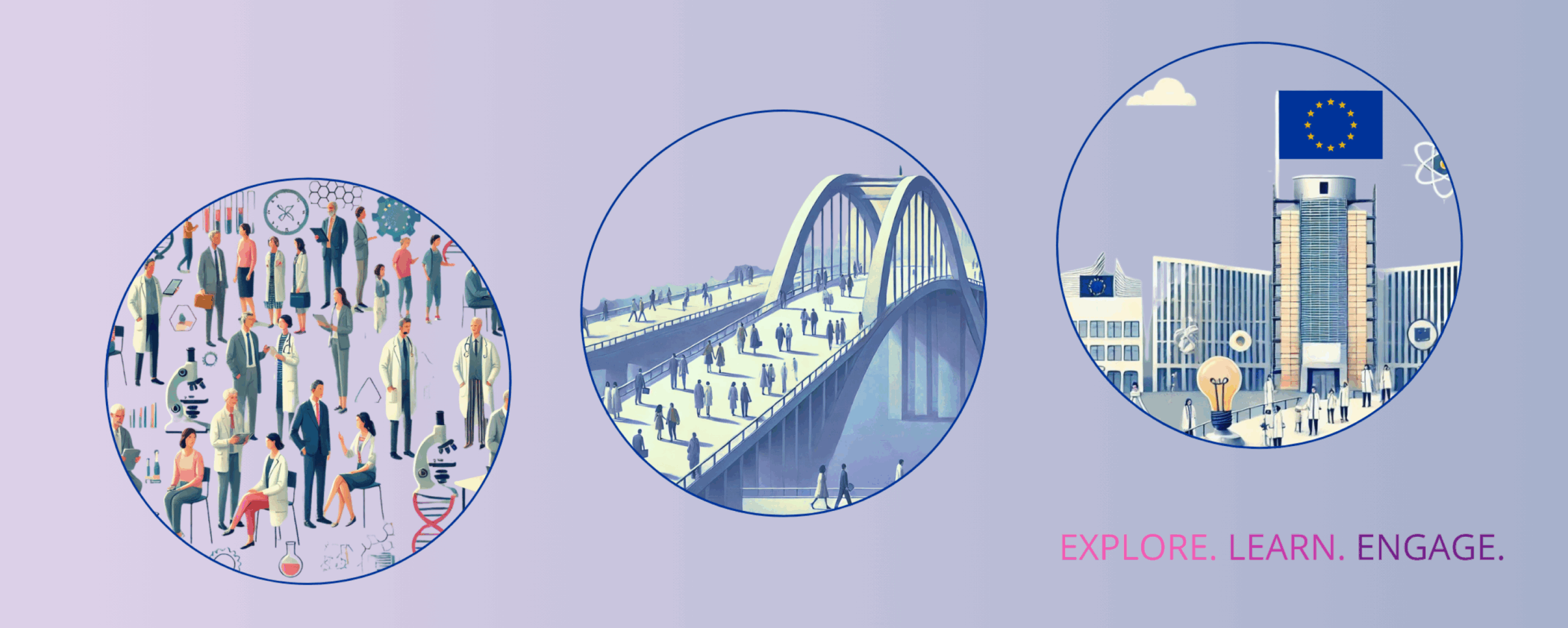
INSPIRING ERA operates as a two-way bridge:

  • We translate policy into practice, helping the research and innovation community across Europe engage with ERA in a way that is meaningful, relevant, and accessible.
  • At the same time, we gather insights from practitioners about how ERA is working in real-world settings—identifying needs, challenges, and good practices—and share them with European policymakers through policy briefs and recommendations.

INSPIRING ERA ensures that ERA policies don’t just exist on paper—but are understood, applied, and improved through practical engagement and structured feedback.

We primarily target individual researchers, research-performing organisations, higher education institutions, innovation actors, and national stakeholders who are not typically involved in policymaking but are directly impacted by ERA policies. At the same time, European and national policymakers benefit from the insights we collect during our work.

If you’re part of an EU project, network or initiative, get in touch to explore how we can collaborate. We welcome opportunities for joint activities, knowledge sharing and cross-promotion – working together to strengthen the European Research Area in practice.

Latest News

On 27 January 2026, the INSPIRING ERA project hosted an online event bringing together participants from more than 30 countries to explore how public engagement and citizen science can strengthen trust in science, foster inclusion, and support democratic participation in research and innovation across Europe. Part of the INSPIRING ERA

The Coalition for Advancing Research Assessment (CoARA) has published a new white paper urging research funders, institutions and policymakers to integrate societal impact as a core criterion in research assessment – alongside academic excellence. Titled Transformative Research Assessment: Integrating Societal Impacts into Evaluation Frameworks, the publication argues that current assessment

As Europe accelerates its green and digital transitions, R&I ecosystems are under increasing pressure to deliver solutions that are not only excellent, but also inclusive, transparent, and socially acceptable. The EU REINFORCING project addresses this challenge by supporting organisations, institutions and territories across Europe in embedding Open and Responsible Research

The European Research Area (ERA) Monitoring Mechanism has become a key pillar in supporting evidence-based policy-making across Europe. With well-established tools such as the ERA Scoreboard, the Dashboard and the ERA Country Reports, the mechanism helps policymakers, researchers and stakeholders understand progress and trends across the continent. To ensure these

Why the strategy was created? Artificial intelligence (AI) is rapidly changing how science works. It can read thousands of research papers in seconds, automate lab experiments and analyze huge datasets, Thus, it helps scientists make discoveries faster than ever before. But Europe faced several challenges: To address these issues and

Do you need to test your research skills? The European Commission has recently launched a new self-assessment tool based on ResearchComp, the European Competence Framework for Researchers. The tool helps researchers explore their skills and identify areas for further development. ResearchComp supports the assessment and growth of research competences across

Latest Events

The POLICY ANSWERS project will conclude with a public final event in Tirana, bringing together policymakers, experts, researchers, and key stakeholders from the Western Balkans and the European Union. The event will provide a space to reflect on the project’s main achievements and to discuss future pathways for strengthening cooperation

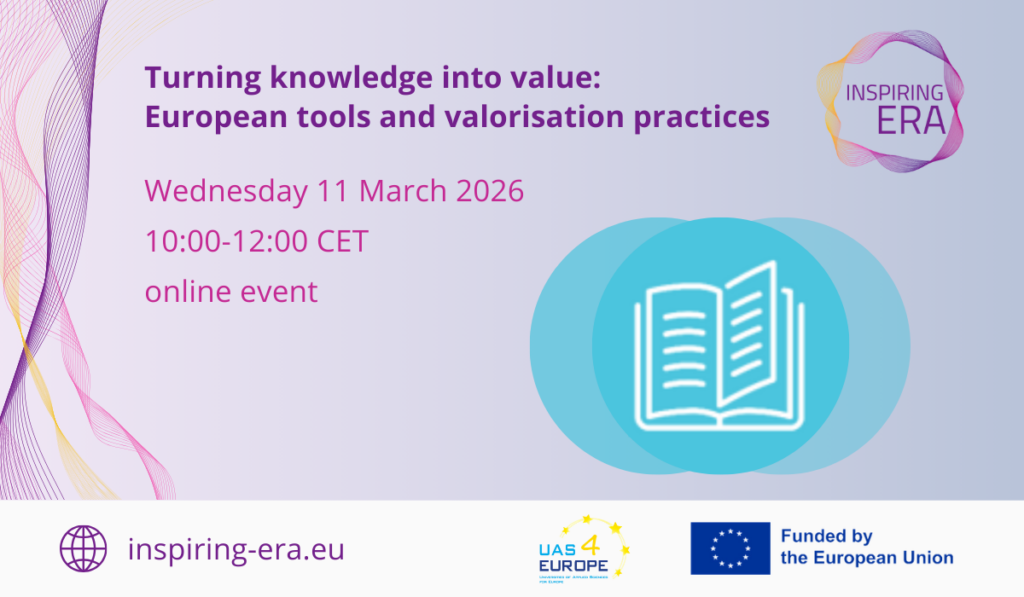
How does research lead to real-world impact? What EU-level support exists to help researchers turn knowledge into action? Across Europe, researchers and research organisations are finding new ways to turn scientific knowledge, ideas and results into societal, economic and environmental benefits. This process of knowledge valorisation can take many forms,

How can multidisciplinary and SSH research generate stronger societal and innovation impact? Join this expert workshop to explore practical pathways for enhancing knowledge valorisation across disciplines.
How can transdisciplinary collaboration unlock greater impact from research and innovation? Join this EU Knowledge Valorisation Talk to explore practical approaches that connect disciplines, sectors, and stakeholders for stronger societal and economic value.

Have you ever experienced how the good research happening in universities can truly make a difference in society and the economy? This is exactly the focus of the conference entitled IMPAC3T‑IP event “Towards a broader impact”. Happening on 5–6 February 2026 at the University of Antwerp, Belgium, the two-day event

How can we make citizen engagement in research more meaningful, more inclusive, and more impactful? This INSPIRING ERA online event on Tuesday 27 January at 10-12 CET will explore what works in public engagement and citizen science through real examples from across Europe. The session will share practical lessons from