
What is INSPIRING ERA?

Bringing the European Research Area (ERA) closer to its research community

INSPIRING ERA is a Horizon Europe project that supports researchers, research and higher education institutions, and innovation actors in understanding and applying the outcomes of the European Research Area (ERA). It helps turn policy into practice by connecting the people who create ERA policies with those who are affected by them and make use of them on the ground.

INSPIRING ERA’s mission is to make ERA outcomes visible, understandable, and usable. We focus on the practical side of policy—translating its effects and showcasing ERA tools, frameworks, and services that the research and innovation community can take up.

We develop factsheets, organise events, and create tailored communication materials that help the research and innovation community navigate ERA’s opportunities—for example self-assessment tools for research careers, open science services and helpful guidelines on using AI in science.

INSPIRING ERA operates as a two-way bridge:

  • We translate policy into practice, helping the research and innovation community across Europe engage with ERA in a way that is meaningful, relevant, and accessible.
  • At the same time, we gather insights from practitioners about how ERA is working in real-world settings—identifying needs, challenges, and good practices—and share them with European policymakers through policy briefs and recommendations.

INSPIRING ERA ensures that ERA policies don’t just exist on paper—but are understood, applied, and improved through practical engagement and structured feedback.

We primarily target individual researchers, research-performing organisations, higher education institutions, innovation actors, and national stakeholders who are not typically involved in policymaking but are directly impacted by ERA policies. At the same time, European and national policymakers benefit from the insights we collect during our work.

If you’re part of an EU project, network or initiative, get in touch to explore how we can collaborate. We welcome opportunities for joint activities, knowledge sharing and cross-promotion – working together to strengthen the European Research Area in practice.

Latest News

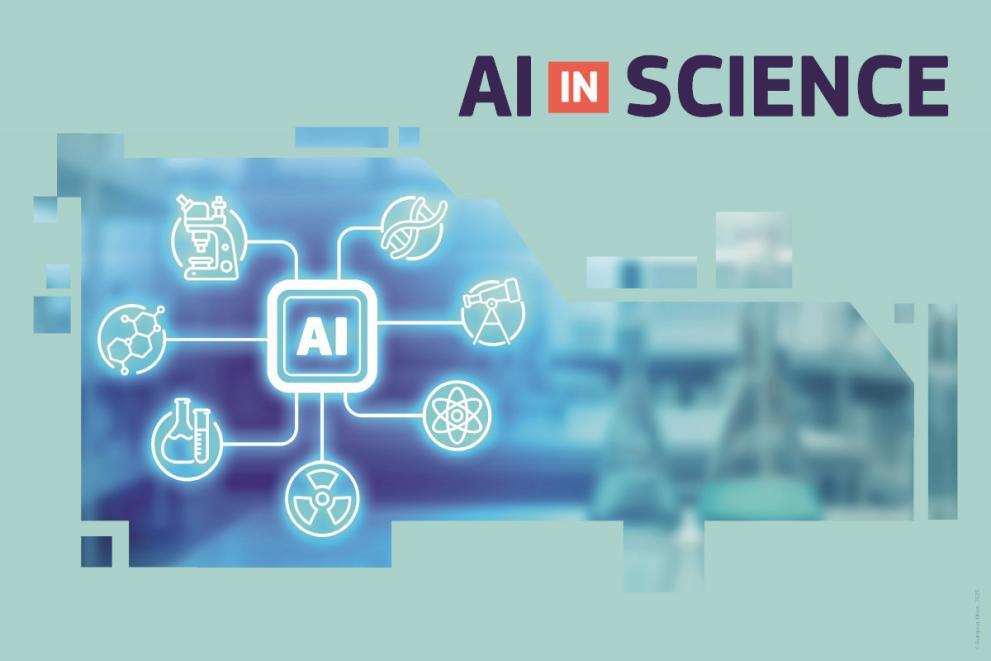
Why the strategy was created? Artificial intelligence (AI) is rapidly changing how science works. It can read thousands of research papers in seconds, automate lab experiments and analyze huge datasets, Thus, it helps scientists make discoveries faster than ever before. But Europe faced several challenges: To address these issues and

Do you need to test your research skills? The European Commission has recently launched a new self-assessment tool based on ResearchComp, the European Competence Framework for Researchers. The tool helps researchers explore their skills and identify areas for further development. ResearchComp supports the assessment and growth of research competences across

How can universities accelerate their institutional transformation—what tools and services can support them, how can experiences be shared across Europe, and what role do targeted acceleration initiatives play in driving systematic change?
Communicating scientific results to society – what’s the best way to approach this, what values and principles should guide us, how can the various European countries learn from each other, and what can national and European agencies do to best support an open dialogue between science and society?
The European Commission has opened a Call for Evidence on the ERA Act, inviting stakeholders and organisations across Europe to share their views. The call, launched on 6 August 2025, will remain open until 10 September 2025.

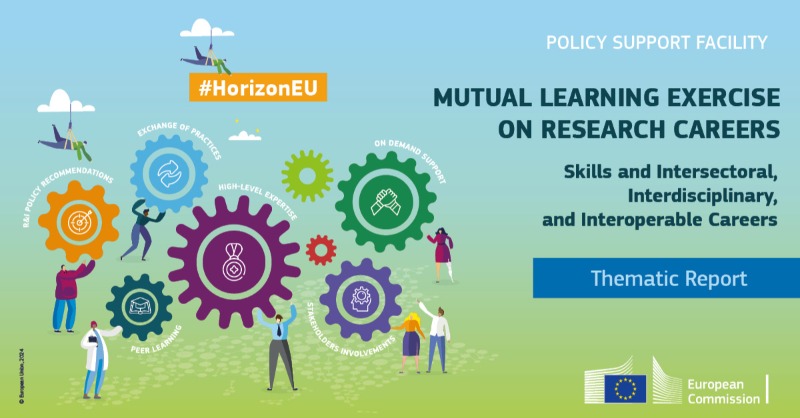
The results of the Mutual Learning Exercise (MLE) on Research Careers, an initiative to support more attractive and sustainable research careers across Europe, are now available. The MLE, coordinated by the European Commission, brought together policymakers and experts from across the EU to exchange best practices and generate actionable recommendations

Latest Events

Over two days, policymakers, research professionals, and stakeholder networks will explore how Europe can create sustainable, excellent, and open career pathways for all researchers. The Conference on Research Careers 2025 on 11-12 December 2025 is the main focus this year – because supporting the people behind that research is more

At a moment when researchers face growing pressure—from political influence and misinformation to surveillance and the disruptive rise of AI—the Conference on Freedom of Scientific Research (open plenary), co-organised with UNESCO, comes to show what it means to protect scientific freedom in Europe. Join us on 10 December 2025 for

In an era where knowledge, innovation, and societal impact are central to Europe’s future, how we assess research and researchers has become a pivotal issue. Traditional evaluation systems, grounded primarily in narrow quantitative metrics, no longer suffice to capture the breadth and diversity of scholarly contributions. Recognizing this challenge, the

As the European Research Area (ERA) celebrates its 25th anniversary, 2025 marks a pivotal moment to reflect on past achievements and to reinforce the ERA’s mission of building a more coherent, open and impactful European Research & Innovation ecosystem. With the new ERA Policy Agenda 2025–2027, renewed political attention is

The Austrian ERA Symposium 2025 – “Towards Europe’s Fifth Freedom”, will take place on 17 November 2025 at TechGate Vienna, and brings together researchers, policymakers, and innovation stakeholders to discuss the future of the European Research Area (ERA). The event will feature a key-note from Commissioner for Start-ups, Research and

On 13 November 2025, the European Commission’s Directorate-General for Research and Innovation (DG RTD) will host its flagship event “From Knowledge to Impact: Shaping Europe’s Next Innovation Wave” in Brussels and online. The event will gather policymakers, researchers, innovators, and stakeholders from across Europe to discuss how knowledge valorisation can drive Europe’s next wave of